Every year, once the furnace kicks on for good around Springfield and Nixa, a few homeowners notice something new: thin dark lines between their hardwood boards that weren't there in August. It can look alarming, but in most homes it's a normal seasonal response to dry winter air. Here's what's going on, when it's worth a closer look, and how to keep your wood floors more stable through heating season.
Wood Moves With the Seasons
Hardwood is a natural material that takes on and gives off moisture as the air around it changes. Ozarks summers are humid, so boards absorb moisture and swell slightly. In winter, forced-air heat dries indoor air out, the wood gives that moisture back, and each board shrinks a little. Multiply a tiny bit of shrinkage across every board in a room and you get visible gaps. Solid hardwood tends to show this more than engineered hardwood, whose layered construction is generally more dimensionally stable.
What's Normal and What Isn't
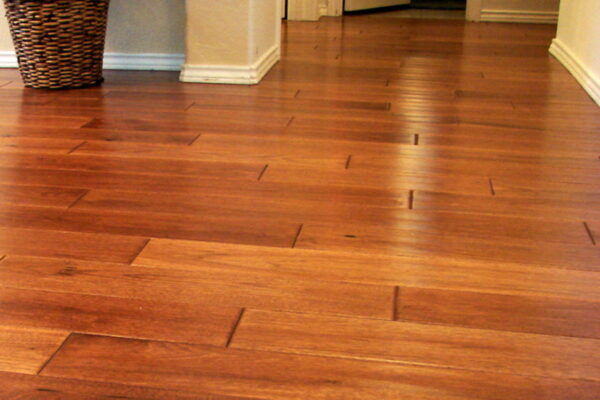
Thin, fairly even gaps that appear in winter and close back up by late spring are usually just seasonal movement. Some situations deserve a closer look, though, because they can point to a moisture or subfloor problem rather than dry air:
- Gaps that stay open year-round or keep getting wider each winter.
- Boards that are cupping (edges higher than the center) or crowning (center higher than the edges).
- Soft spots, new squeaks, or boards that move underfoot.
- Gaps concentrated in one area, such as near an exterior door, a bathroom, or over a crawlspace.
If you're seeing any of those, our floor repair service starts with finding the cause before fixing the surface.
How to Keep Wood Floors More Stable
The most effective step is managing indoor humidity. Many wood flooring manufacturers recommend keeping relative humidity within a moderate range year-round, so check the guidance for your specific floor. A whole-home or room humidifier can help a lot in January and February, and an inexpensive hygrometer lets you see what's actually happening. Avoid cranking the heat way up and down, and keep floor vents clear so warm air doesn't blast one section of floor.
Planning a New Floor? Acclimation Matters
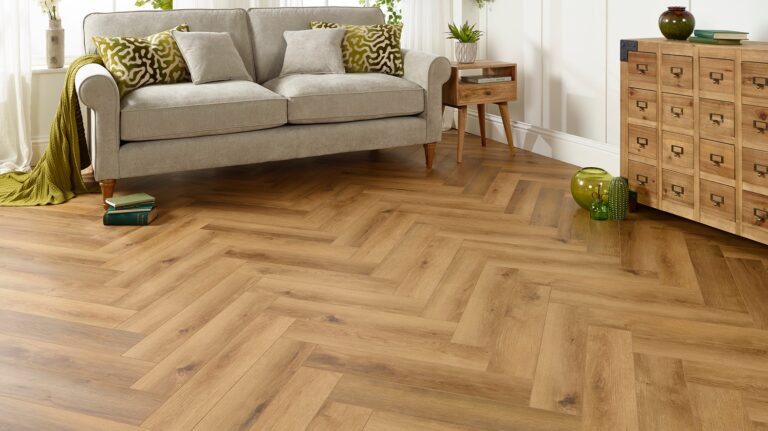
If you're adding wood floors this winter, acclimation and moisture checks are a big part of a lasting install. We check the subfloor and the material before anything goes down, and we install to the manufacturer's specifications. For rooms where seasonal movement is a real concern - over a slab, or in a space with big humidity swings - engineered hardwood is often the steadier choice. Our flooring buyer's guide for Ozarks homes compares the options, and our installation page explains how we work.
Not sure whether what you're seeing is normal? We're happy to take a look anywhere across the Greater Springfield area. Homeowners from Ozark to Republic can book a free in-home visit.
Worried about gaps, cupping, or squeaks in your hardwood? Get an honest assessment at your home.
Schedule your free estimate